


Published by: Elise Caradec — Editor specializing in stock exchange
In a crypto universe where interoperability and performance become indispensable prerequisites, Cosmos and his token ATOM offer architecture connecting more than 150 blockchains. This model meets both the criteria of safety, scalability and the expectations of regulatory sobriety, points sought by investors as well as by innovative companies.
Cosmos (ATOM): What is it, how does it work and what is it really for?
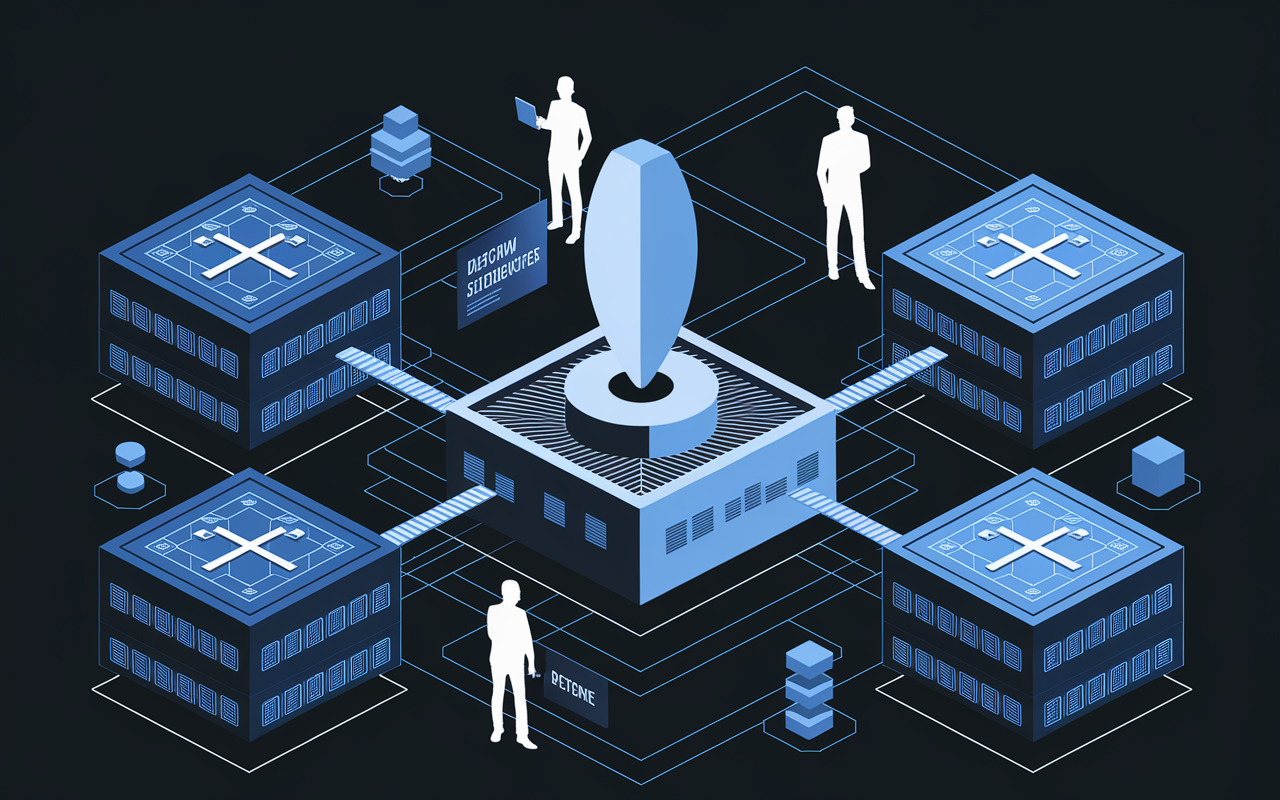
Would you like to capture the essence of Cosmos in crypto? Many question: Cosmos has a clear ambition in the proliferation of current blockchains: to facilitate communication between blockchains, to provide a secure, fast and adapted infrastructure for both investors and developers. In practice, Cosmos is not limited to an additional chain. It is a modular platform designed to play the role of the Internet of blockchains. It could be compared to a motorway on which every project circulates, exchanges and evolves without technical constraints.
ATOM, the network's central token, occupies a strategic position: it serves in particular to secure the system, pay costs and take part in protocol decisions. By mid-2026, there were ATOM 512.5 million in circulation, for a value of approximately 1,50 €. However, Cosmos goes beyond the simple token: it is addressed to an extended panel, ranging from curious novices to the most demanding institutions. Some professionals note that this versatility promotes rapid adoption.
Summary of key points
- ✅ Cosmos connects more than 150 blockchains via modular architecture.
- ✅ ATOM ensures the security, cost and governance of the Cosmos network.
- ✅ Interoperability and scalability are at the heart of the project.
Cosmos: founding principles and challenges of blockchain interoperability
Take a moment to imagine: all blockchains, usually partitioned, become able to dialogue and exchange value in real time. This is precisely what Cosmos promises, regularly assimilated to a « operating system » Blockchain.
In the background, the crypto sector suffers from fragmentation. Each blockchain operates in isolation, stopping token traffic, slowing down innovation and limiting user responsiveness. Cosmos was launched to lift this barrier – with its Inter-Blockchain Communication (IBC) protocol, more 150 blockchains are already interconnected, and exchanges are carried out quickly and safely up to 10,000 transactions per second, with latency less than 1 second.
The goal is to unify the user experience, simplify the creation of cross-chain applications, and in passing, meet institutional requirements (auditability, compliance, security). Moreover, a trainer noted that a simple transfer on some competing channels may take several minutes. The difference becomes obvious.
The "universal language" between blockchains
Let's take a closer look at the central part: the IBC, a protocol developed by Cosmos that allows connected blockchains to exchange, make active transfers and synchronize data. If the Web3 were ever to speak a common language, the IBC would be a natural candidate: it is no longer necessary to go through a centralized gateway or a complex bridge to move a token from an A-chain to a B-chain.
Imagine: stablecoins created on a Cosmos compatible blockchain are transferable on a DeFi application based on another area, with a fluidity similar to a conventional transfer. In some cases, users describe a radically different experience compared to that of a closed ecosystem.
ATOM: operation, real utility and valuation
ATOM is the native token of the Cosmos Hub: it acts as fuel, « Entry ticket » and governance instrument. Its usefulness extends far beyond pure speculation.
It is better to remember that ATOM can validate transactions through the staking (Proof of Stake), ensure network security, pay fees, and have a voting right over the evolution of the protocol. This versatility seduces both prudent investors and those who want to engage in the future of the network. One expert recently mentioned that community involvement in these uses is progressing relatively fast.
Here is where ATOM stands out:
- Some holders deposit (stakent) their ATOMs to collect rewards, with a fluctuating yield between 7 and 20 % annual inflation by period.
- ATOM staké gives a vote to validate the upgrades or to guide the development of the project, with each vote influencing decision-making.
- For security: Stake capital protects the entire Cosmos Hub, benefiting more than 150 connected blockchains.
- On the operations side: every transaction on Cosmos Hub or used with IBC settles in ATOM, which guarantees a concrete and daily use at the token.
The supply of ATOM remains unlimited, regulated by a control mechanism to maintain the economic interest of the staking. By mid-2026, ATOM's capitalization reached about EUR 770 million, which places the token in the top 50 worldwide In this market, it is a success to salute, especially for a token above all utility.
IBC, Cosmos SDK, zones: modular and efficient technical architecture
Some call Cosmos a "lego blockchain" for developers. But what does this expression cover in the field? To synthesize, Cosmos offers an open source set of tools (the Cosmos SDK) allowing any player to launch its custom blockchain – an area – taking advantage of the robustness of the Cosmos Hub and the IBC interoperability.
It is often found that it is possible to launch a blockchain dedicated to decentralized finance, gaming or tokenisation of real assets, and then to connect it from the outset to a secure network. This flexibility attracts both crypto startups and banking groups: in Japan, some consortia have claimed up to 48% market share on the tokenization of assets, greatly thanks to Cosmos.
Concrete benefits for developers and companies:
- The Cosmos SDK allows to create a custom blockchain in a few weeks.
- interoperability via IBC is automatic: transfers, inter-chain calls, data synchronization are done in a seamless way.
- With regard to scalability: 10 000 GST, settlement < 1 second, and stability that is verified on 10 years activity.
- Security audit: CertiK score 4.7/5with respect to legal and banking standards, which facilitates institutional deployment.
Some banking professionals ensure that there are rarely such flexible infrastructures to design future payments or digital assets. Is that really the case for everyone? This point deserves close attention from policy makers.
Good to know
I recommend that you test the flexibility of the Cosmos SDK if you are a developer, as it allows you to quickly create an interoperable custom blockchain as soon as it is launched.
Cosmos vs Ethereum, Polkadot and others: differences and comparative tables
The question comes up regularly: Is Cosmos in direct competition with Ethereum, Polkadot or Solana? The reality is not so clear. Cosmos does not aim to supplant Ethereum: it remains primarily a project designed to connect ecosystems, focusing first on interoperability and modularity.
| Criteria | Cosmos | Ethereum | Polkadot |
|---|---|---|---|
| Native interoperability | Yes (IBC, Areas) | Experimental (bridges) | Yes (parachains) |
| Scalability | 10 000+ GST | ~30 GST (Layer 1) | 1000+ GST (theoretical) |
| Governance | On-chain (ATOM) | Partially on-chain | On-chain (DOT) |
| Modularity | Cosmos SDK (full custom) | Smart contracts (limited) | Substrate (advanced modularity) |
| Institutional use cases | Many (banks, consortia) | Accessible but less natively oriented | Developing |
| Average price of token (June 2026) | 1.50 € (ATOM) | 2 200 € (ETH) | 5.80 € (DOT) |
Cosmos is distinguished by its ability to aggregate, not to oust its competitors. One could imagine it as an airport hub where all the airlines cross, rather than competing on the same runway. Several experts stress the complementarity of models, generating a network effect beneficial for the whole sector.
Use case, institutional impact and real ecosystem
What makes Cosmos specific is its concrete presence on the ground. We find him behind banking consortia, DeFi platforms, government initiatives, not to mention real asset tokenization options. It murmurs that some actors appreciate the stability offered by Cosmos for long-term projects.
Some significant figures: over $70 billion actives are secured on the Cosmos network, and there are more than 13 million users on mainstream platforms like Kraken. In Japan, the platform accumulates between 45 and 50% market share on tokenization, demonstrating that this ecosystem is far from a simple proof of concept.
Tangible scenarios:
- In the banking sector: tokenisation of real estate shares or ultra-fast interbank payments, a change that changes practices.
- Decentralised finance: inter-chain transfers between stablecoins in different Cosmos areas ensure a smooth experience for users.
- In gaming or NFT: marketplaces connect several blockchain games, without complex gateways, which simplifies the lives of players.
The feedback from institutions also shows the level of strength and compliance of Cosmos (audits, certifications, taking into account regulations), although some projects may have to adapt their structure to meet local demands.
Cosmos FAQ: Your questions, our answers (version 2026)
Are you wondering if it's worth taking the step or if easy onboarding is possible? Here is what to remember about the key Cosmos issues:
What is Cosmos in crypto?
Cosmos is an open source blockchain ecosystem whose mission is to connect and dialogue different blockchains, thanks to the IBC and a modular architecture. It is regularly recommended to assimilate to an "Internet of Blockchains".
What is ATOM for?
ATOM contributes to the security of the Cosmos network through the staking, allows to settle transaction fees and gives access to governance. In the second half of 2026, the reward rate varies by 7 % to 20 % annual.
Is Cosmos a blockchain or an ecosystem?
Better to see the whole: it is a structured ecosystem around the Cosmos Hub, many areas (independent blockchains), and the IBC to connect the whole.
What is the main difference between Cosmos and Ethereum?
Ethereum centralizes everything on a single chain. Cosmos operates in a network of connecting blockchains, with the interoperability envisaged from the design; Ethereum must use bridges, sometimes less fluid.
What is the BWI?
Inter-Blockchain Communication Protocol: This is the system that transfers tokens and information between all Cosmos zones, without requiring a central gateway or trusted third party.
Can we just stable ATOM?
Yes: compatible wallets (Keplr, Cosmostation, Leap...) or some exchange platforms allow to stand. Rewards fall every few days, depending on the rate of the moment (the regularity of distributions is regularly emphasized).
Is Cosmos an interesting investment?
Like any crypt, ATOM remains volatile. Moreover, its utility value, its institutional adoption, and its capacity to innovate make it attract many investors, not just those looking for a simple price increase.
Why is Cosmos called « Internet of blockchains » ?
In concrete terms, it connects more than 150 blockchains different on a federated model (zones, hub) and open source, unlike traditional closed chains.
Is Cosmos useful for developers?
This is one of its major assets: Cosmos SDK allows any developer to create a custom blockchain, interoperable from the start, without starting from scratch. A technical manager with startups often advances this time saving as a determinant.
Cosmos Hub and zones: what difference?
The Cosmos Hub represents the central chain; zones are independent blockchains linked to the Hub via IBC. Each can manage its own token, its rules, its uses... while benefiting from the Cosmos base.
Want to continue, exploration? It is best to test the Cosmos Wallets (Keplr, Cosmostation), browse Map of Zones or look at the guides for beginners offered by the official site and the famous trades (Kraken, BLOX...). If a question persists, you are not the only one: the Cosmos community welcomes newcomers, allowing to discover, experiment or even contribute to building the blockchain Internet.