


Published by: Elise Caradec — Editor specializing in consulting
It's better to catch the taxation of the ordinary securities account when investing, especially to optimize earnings and avoid bad surprises at reporting. The reality is that every PFU choice, progressive scale, reduction, or carry-over of losses directly influences the net return on capital CTO and should adjust to the heritage strategy, regardless of the amount invested or the envelope preferred in relation to the EAP or life insurance.
Tax on ordinary securities account (CTO) – the simple answer, supporting figures
You want to understand how your earnings on a CTO are taxed, or what option to choose between PFU and scale? Here's what we can remember: the ordinary securities account is a matter of ordinary law, which means that your dividends and gains are taxed from their collection or realization. The tax rate applied is 31,4% via the Single Flat-rate levy (PFU, flat tax) 12,8% income tax and 18,6% social contributions. It remains possible to choose the progressive IRR scale, especially if your band is small or if discounts apply. Deductible losses remain deductible on 10 years.
A concrete example? On 1 000 € net tax will typically be 314 €. On a surplus value of 800 €, PFU taxation also applies. Dividends and capital gains differ from the EAP in terms of taxation. The option for the progressive scale is sometimes worth considering if your overall income stays in a low band, or if you are eligible for a discount (dividends benefit from the 40% d 50% or 65% After 2 or 8 years of detention).
It is regularly observed that the CTO offers more flexibility, but it is less advantageous fiscally than an EAP. Taking the right option depends on the tax rate, income and total earnings. To avoid paying too much, it is better to simulate your tax or consult a professional.
Would you just like to calculate your CTO tax or compare it with a PEA before investing? Heritage simulators and summary tables are below.
Definition, principles and operation of the CTO
The CTO is accessible to any investor, without ceiling, with direct taxation. Why are so many individuals interested in it, while its tax framework is less attractive than that of the PEA? According to advisors, it is mainly because it allows to invest on all asset classes – equities, bonds, funds, ETFs listed or foreign – without restrictions or delays.
The opening of the CTO can be done in bank, at a broker's house, or with a heritage advisor, sometimes with a reception offer up to 260 €. Unlike the PEA (ceiling) 150 000 €), the CTO does not require that securities be European or "eligible" and does not limit withdrawals or deposits. If you have an account with a foreign broker, consider reporting it via the form 3916 to taxes.
Main differences with PEA and life insurance
CTO taxation applies annually to realized income and capital gains. No tax exemption related to duration (excluding allowances for long-term securities). On a PEA, earnings are taxed only in the event of withdrawal, with an exemption after 5 years. In life insurance, taxation becomes softer after 8 years on winnings withdrawn.
Another point to note:
- CTO : taxation takes place on receipt or collection of dividends
- PEA Tax exemption possible after 5 years, but only on eligible securities
- Life insurance : flat-rate levy declining after 8 years, annual interest allowance
Without a ceiling on CTO, the counterpart remains a total and immediate tax. Some find that the CTO seduces by its flexibility... But many investors are disconcerted by the tax burden from the time they first report.
CTO: PPU or progressive scale? Rules and Choice
Once a CTO is opened, the question comes up regularly: PFU or progressive scale? One is direct and fast, the other has to be analysed according to the context of each. According to a heritage management trainer, it is sometimes useful to decorate the mechanism in order to avoid a bad surprise in the spring...
Single unit levy (PFU/Flat Tax): details and calculation
By default, the PFU 31,4% applies. This combines 12,8% d 18,6% social contributions. It also covers dividends, coupons, capital gains on securities and funds.
In practice, on a gain of 2 000 € (dividends or surplus value), the amount to be paid 628 €. The calculation is quick, but it is not possible to apply certain discounts or carry over losses by choosing this option.
Progressive Income Tax Scale – the option to analyze
It is often recommended to opt for the progressive scale at the time of the annual declaration (form 2042). Dividends benefit from a reduction of 40% Only the remaining part is taxed. Capital gains on securities can benefit from a reduction of 50% (after 2 years of detention) or 65% (after 8 years). This can reduce taxation, especially if your IR tranche is less than 12,8% or that you have previous losses.
Last point to note: the progressive scale applies to all investment income, not to an isolated transaction. This choice can save a handful of euros, but it depends on the personal tax context.
| CTO – PFU | CTO – Progressive scale |
|---|---|
| 31.4% on all earnings | 0 to 45% IR, discount 40% / 50% / 65% |
| Fast, simple | Require simulation, declaration |
| No accounting for losses | Carryable losses 10 years |
A classic scenario: the investor with low income or losses to carry forward must make a precise calculation to choose. According to professionals, using a simulator or seeking heritage accompaniment makes a regular difference.
Good to know
I recommend that you carefully analyze your personal situation before opting for the UFP or progressive scale, as this choice directly impacts the amount of tax payable.
Income tax and capital gains – what you need to know to avoid errors
As far as CTO is concerned, taxation does not give a gift in case you forget... and certain subtleties of reporting cause errors, including those who already have experience. Each year, it is necessary to inform its income and capital gains (or losses) via the appropriate forms.
Common forms, procedures and traps
To report CTO earnings, you will mainly use the form 2074 (value gains), 2074-CMV (losses), 2042 (income from movable capital), and 3916 for accounts held abroad. Most French banks or brokers provide a IFU (Single Tax Print) summarizing the elements to be entered.
It should be noted that the error that comes back relatively often is to forget to declare an account opened abroad even without a transaction. And sometimes, too, capital gains and dividends are confused, while tax treatment differs.
- Dividends in income from movable capital
- Value additions to be noted on the 2074, with calculation of net
- Losses to be reported on the 2074-CMV
- Mandatory reporting of foreign accounts in each financial year
A advice shared by some tax practitioners: check dividends systematically (40% on the scale) and on capital gains (depending on the length of detention). Otherwise, you may pay more taxes... And it's not always obvious to catch him next.
Undervalues and optimization – how to limit your tax on CTO?
Making a loss of value is not pleasant, but there are legal ways not to lose them. In fact, CTO taxation allows these losses to be carried over to about 10 years to charge them against future earnings, provided that a report is made in accordance with the law.
Deferral rules and optimization advice
Losses on the sale of securities can be carried forward during 10 years, provided that the progressive tax scheme is chosen. Sometimes an investor specifically favours the scale to value rather large accumulated losses.
Typically, if you have 2 000 € capital losses on shares in 2024, they will be carryable on any profit made until 2034. This reduces the tax base on your capital gains, so the final tax. This mechanism is particularly useful for those who purchase and resell regularly and alternate gains and losses (a heritage expert reported that this point is regularly underestimated).
Some key benchmarks:
- 10-year carry-over Articles 150-0 D and E of the CGI
- Applicable only on transfers, not on dividends or coupons
- Strict declaration required (without which the postponement is lost)
- Progressive scale required to activate the delay
If you do a heritage balance sheet to validate these deferrals, it can avoid losing substantial tax savings. Sometimes, a simple omission is enough to make disappear a declarable loss...
CTO vs PEA / life insurance – the tax comparison in tables
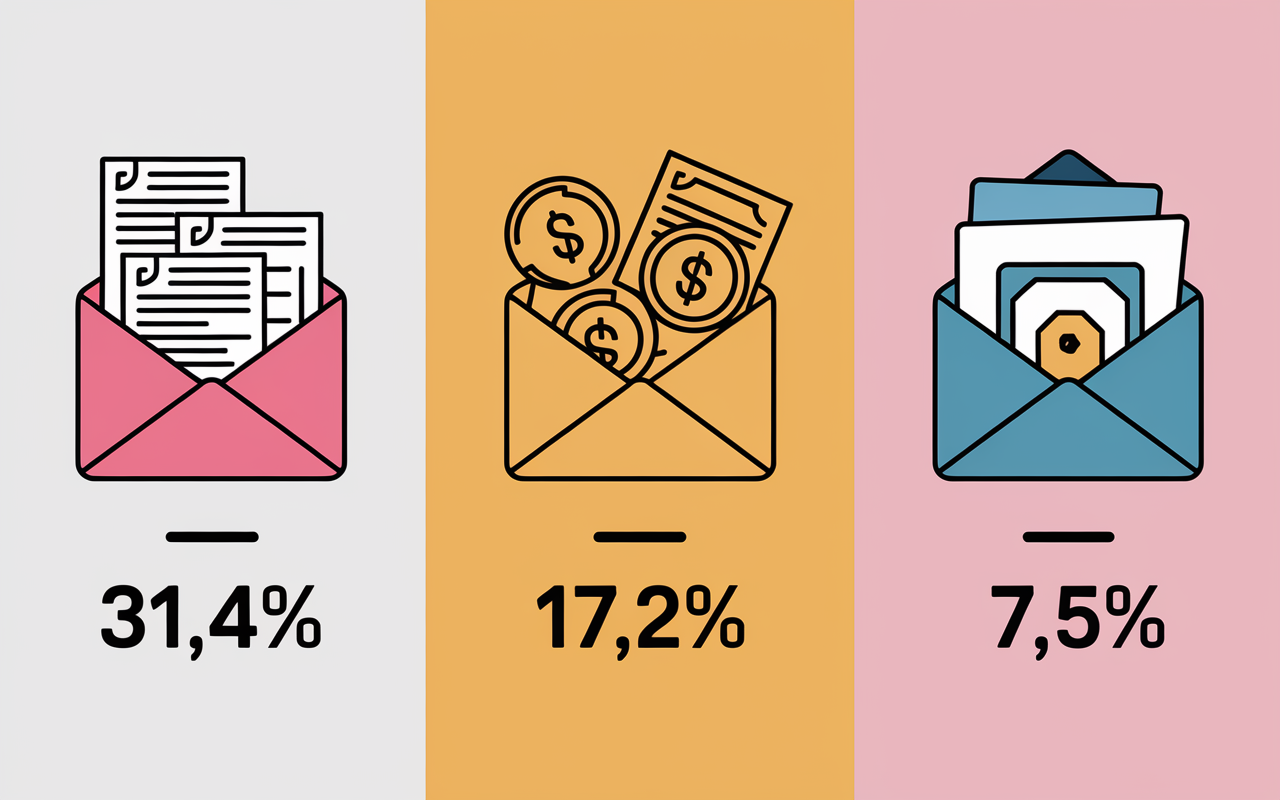
It is difficult to choose your envelope without analysing concrete situations. Rates, discounts, and tax patterns differ: CTO, PEA, and life insurance each offer their strengths according to the horizon or investor profile.
Comparison table – CTO, PEA, life insurance
Want to know the cheapest option? Let's take a closer look:
| Envelope | Taxation on earnings | Ceiling | Reduction | Social levies |
|---|---|---|---|---|
| CTO | PPU 31.4% / IR scale + allowances | Unlimited | 40% (dividends), 50-65% (plus value) | 18,6% |
| PEA | Exemption after 5 years (excluding PS) | 150 000 € | None, exemption possible | 17,2% |
| Life insurance | PFU 24,7% (<8 ans), 7,5% + abattement après 8 ans | Unlimited | 4 600 € / 9 200 € per year | 17,2% |
Moreover, the CTO seduces by its flexibility, and its lack of ceiling, but does not grant any protection against immediate taxation. The AEP is intended for those who are willing to immobilize their funds on 5 years or more, while life insurance offers soft taxation over time or for succession.
An online simulator or heritage recett clearly helps visualize the actual cost depending on the project (short term/dynamic or long term/optimization). Sometimes an investor tries "all on CTO"... while the CTO + PEA/life insurance duo usually allows a significant reduction in the total tax weight.
Practical FAQ and tools: CTO taxation in action
CTO taxation remains technical, but adapted tools and a concise FAQ resolve the majority of doubts in a matter of minutes. Are you asking one of those questions? The answer is within reach:
FAQ: Your questions about CTO taxation
What tax on a CTO? Default PPU (31,4%) or progressive scale (0–45%), to be determined according to your return. Dividends: discount 40%. Capital gains : discounts 50% after 2 years, 65% after 8 years (on eligible securities).
Should I choose PFU or scale? It is best to calculate according to your IR tranche, family status, amount of losses and volume of earnings. A tax simulator gives a quick estimate.
Can losses be deducted or deferred? Yes, for transfers between 9 and 11 years, if the return is made in the correct form (2074-CMV).
Are brokerage fees deductible? This seems to indicate that they are, in order to calculate the net capital gain to be reported (e.g. on 800 € capital gain, 100 € of brokerage are deducted).
What to do in case of an account with a foreign broker or tax residence outside France? Mandatory declaration (3916), specific tax rules depending on the country of residence.
How to avoid mistakes? Review allowances, carry-back losses, do not omit reporting of foreign accounts and use a practical guide or heritage accompaniment.
Assessment or simulation offered? Yes, it is recommended to make an appointment to validate your tax arbitration, or to compare in a few clicks via an interactive simulator.
Tools and guides available to act in confidence
- CTO/PEA tax simulator available online
- PDF reporting guide to download
- Heritage report available (direct contact)
- Tutorial for forms 2074, 3916, 2074-CMV
Some accompanied guests (more than 600 families, score 4,8/5) say that they saved several hundred euro with an optimized declaration or a relevant arbitration. Like them, it is sometimes enough to validate its tax optimization before acting.
Teaching box: the 7 most frequent tax errors on CTO
- Forget to report an account held abroad
- Consolidate dividends and capital gains when filling in forms
- Do not activate the carry-over of losses
- Steady on dividend reduction when choosing the scale
- Reporting brokerage fees in the wrong place
- Failing to compare CTO/PEA before investment
- Ignore the potential tax impact of a succession on CTO
It is better not to be destabilized by complexity. The tool, the guide and the balance sheet offer real ways to decide calmly and avoid "overpaying" tax... Investing in CTO also means choosing to be well accompanied.